
The failure nobody looks at
Homeowners in The Woodlands and Cypress call us about a roof that is "only twelve years old and already looks terrible." The shingles are curling, the granules are in the gutters, the colour has gone chalky. The natural assumption is that somebody sold them cheap shingles.
Sometimes that is true. More often the shingles were fine and the attic beneath them was an oven.
How a roof is supposed to breathe
A roof assembly is a chimney. Cool outside air enters low, at the soffits under your eaves. It picks up heat and moisture as it rises through the attic. It leaves high, at or near the ridge. That continuous flow is the entire mechanism, and it needs both ends to work.
The building-code baseline is 1 square foot of net free ventilating area per 150 square feet of attic floor — relaxable to 1 per 300 where a proper vapour retarder is installed and the intake and exhaust are balanced close to 50/50. "Net free area" is the actual open area after the screen and louvre are subtracted, which is always less than the hole it sits in. A 1,500 square foot attic at the 1:150 ratio needs roughly 10 square feet of net free area, split about evenly between low and high.
Why this is worse in the Houston area than almost anywhere
- Heat. Sustained mid-nineties air temperature with brutal direct sun. A vented attic runs 10–20°F above outdoor air. An unvented one runs 50–65°F above it.
- Humidity. Gulf moisture that gets into the attic and has nowhere to go condenses on the underside of the decking. Over years that is how plywood delaminates and framing grows mould.
- Ductwork in the attic. Most homes here run HVAC ducts through that space. A 150-degree attic means your air conditioner is pushing cold air through ducts sitting in an oven.
Asphalt shingle is a petroleum product. Bake the back of it for a decade of Texas summers and the binder dries, the mat gets brittle, granules let go, and edges curl. From the street it looks like the shingles failed. They did — from underneath.
The four faults we actually find
1. Blocked soffit intake
The single most common one, and the cheapest to fix. Blown-in insulation gets pushed into the eaves during an attic top-up and seals the intake vents completely. Now the exhaust has nothing to pull from, and the whole system stalls. Baffles at the eaves — inexpensive plastic channels that hold insulation back — solve it permanently.
2. Painted-over or screened-solid soffit vents
A repaint that closed the perforations, or bug screen packed with two decades of dust and pollen. The vent is there. It is not open.
3. Mixed exhaust types
Ridge vent plus turbines plus a powered fan on the same attic. It looks over-ventilated. It is worse than under-ventilated, because the strongest exhaust pulls air from the nearest opening — the other vents — instead of from the soffits. Air short-circuits across the top of the attic and the bulk of the space never moves. Pick one exhaust strategy per attic.
4. Exhaust without intake
Plenty of high vents, nothing low. A chimney with a cap on the bottom. Adding more roof vents to this attic changes nothing at all — and it is exactly what gets sold to homeowners who complain about attic heat.
Signs your attic is not breathing
- Upstairs rooms that will not hold temperature no matter what the thermostat says
- A roof aging visibly faster than neighbours' roofs of the same age
- Rusty nail points visible in the attic — that is condensation
- Insulation that looks matted, dark or damp near the eaves
- A distinct musty smell when the attic hatch opens
- Ice-free but persistent moisture staining on the underside of the decking
- Soffit vents you cannot see daylight through from inside the attic
Ridge, turbine or static?
| Type | Best for | Trade-off |
|---|---|---|
| Ridge vent | Homes with a long continuous ridge and clear soffits | Needs adequate ridge length; must be cut and installed correctly to work |
| Turbine | Short or broken ridge lines; high volume per unit | Moving parts; can be noisy as bearings age |
| Static / box vent | Simple, cheap, no moving parts | Lower flow per unit — you need several, and they must be placed high |
| Powered fan | Rare cases with no workable passive path | Can depressurise the attic and pull conditioned air out of the house |
The choice matters less than people think. Enough intake, one consistent exhaust type, correctly sized — that is the whole game.
What it costs
Correcting ventilation is a fraction of a replacement. Clearing and baffling soffit intake, or adding properly sized exhaust, generally runs in the high hundreds to low thousands depending on roof size, ridge length and how much intake work the eaves need. Compare that to a $12,000–$17,000 replacement and you can see why we assess it before we quote anything else.
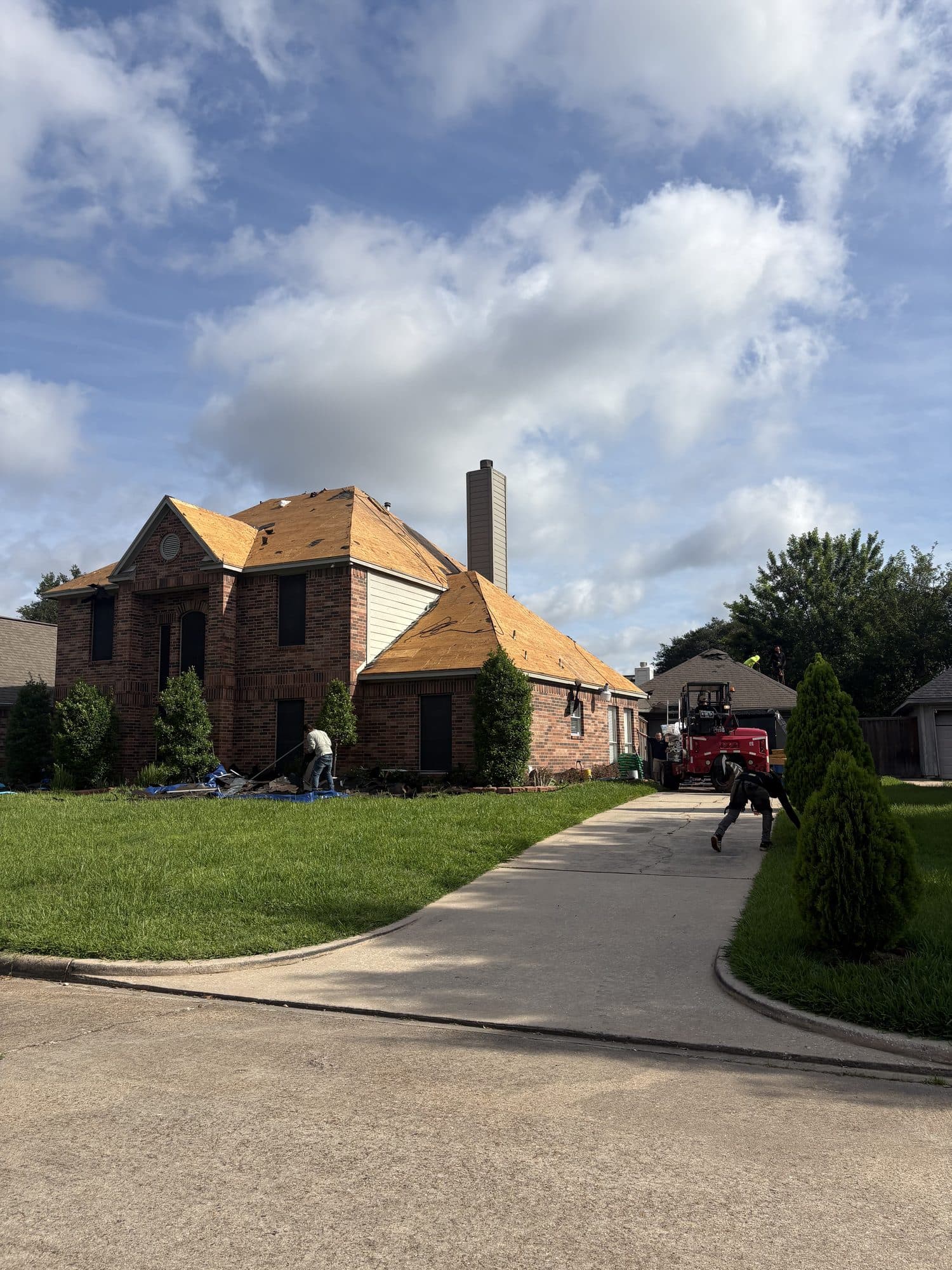
And if you are replacing the roof, this is the moment to fix ventilation — the deck is open, access is free, and the alternative is installing a brand new roof into the same conditions that destroyed the last one.
We check this on every inspection, free
Every Tex-Mex Roofing inspection includes the attic and the ventilation path, not just the shingles. If your intake is blocked we will tell you, even when the answer is a few hundred dollars of baffles rather than a new roof.
See our attic ventilation service, request a free inspection, or call (832) 708-4611. Serving The Woodlands, Cypress, Spring, Tomball, Magnolia, Conroe, Klein, Champions, Jersey Village and Shenandoah.